
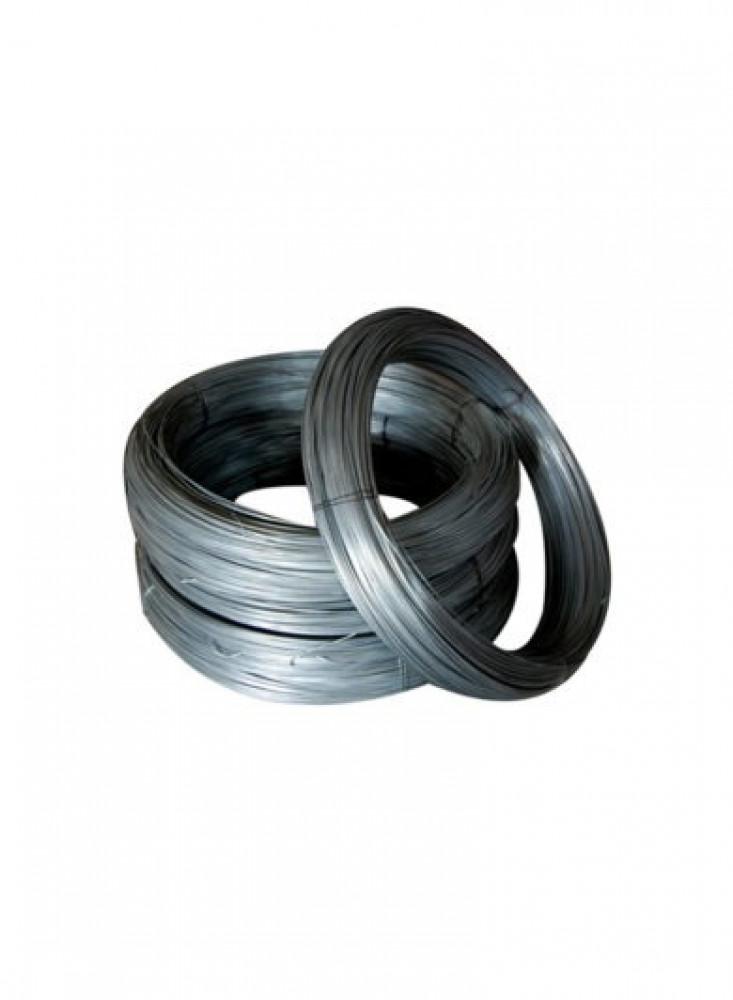
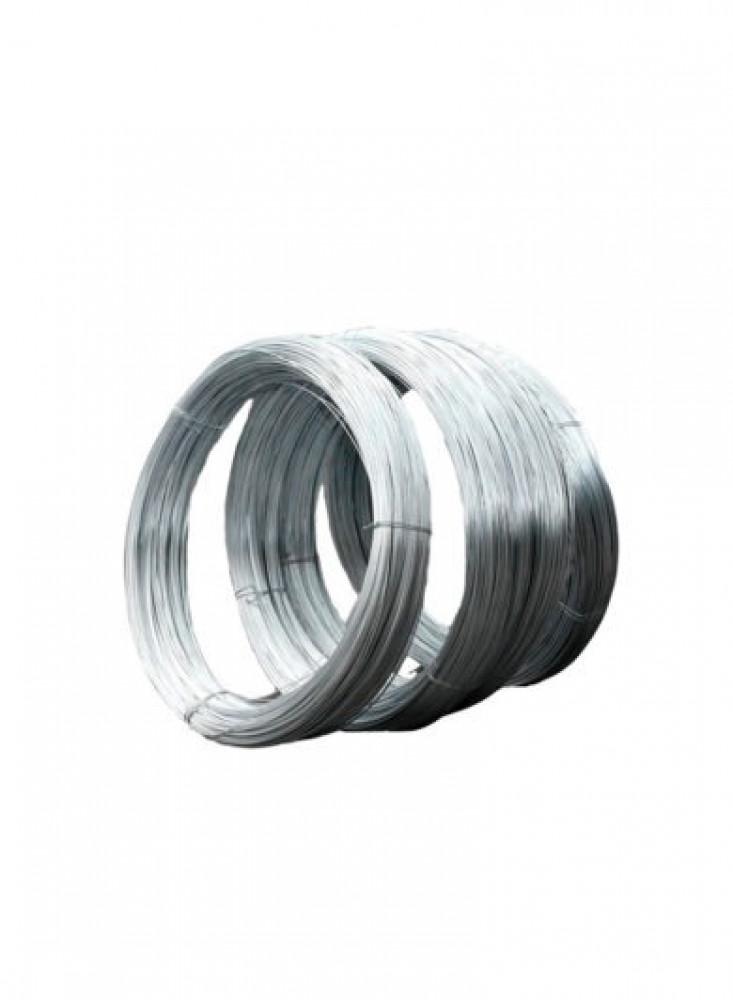
Galvanized binding wire (tipping wire) for tying and securing reinforcing steel bars at their intersections before concrete pouring in roofs, foundations, columns, and walls. The zinc coating protects the wire from rust during on-site storage and exposure to moisture and rain, keeping it clean and flexible until the end of the spool. Available in several sizes, from thick 10 gauge to thin 22 gauge, allowing you to choose the thickness that best suits the type of work and tying method.
Specifications
- Type: Galvanized steel binding wire
- Material: Low-carbon steel with zinc coating
- Available thicknesses (gauges): 10, 12, 14, 16, 18, 22
- Shape: Roll
- Main use: Tie reinforcing steel in concrete work
Size guide: Which size should you choose?
The gauge number is the second digit in the cucumber's name (e.g., 6/22 = gauge 22). The higher the gauge number, the thinner the wire and the easier it is to wind by hand.
| The gaij | Approximate diameter | Options in the store | Proper use |
|---|---|---|---|
| 22 | 0.7 mm | 6/22, 7/22 | Thinner and more flexible — quick manual fastening of roofing and foundation dowels |
| 18 | 1.2 mm | 6/18, 7/18 | Most commonly used on-site — a balance between ease of wrapping and strong binding |
| 16 | 1.6 mm | 6/16, 7/16 | Stronger connection for thicker rebars and column intersections |
| 14 | 2.1 mm | 7/14 | Robust installation for heavy netting and fencing work |
| 12 | 2.8 mm | 6/12, 7/12 | Tightening, suspending, and fixing requires high rigidity |
| 10 | 3.4 mm | 7/10 | Thicker — Tightens fences, suspenders, and heavier loads |
The diameters are approximate according to the British Gauge Table (BWG) and are for guidance only.
Why galvanized?
- It does not rust in storage: Ordinary uncoated wire rusts if left exposed on site, while galvanized wire maintains its surface and strength.
- Suitable for exposed and humid places: fences, farms, open warehouses and near coastal areas.
- Flexible and easy to twist: It twists with pliers or a hand-held knotting tool without breaking at the knot.
- Versatile: In addition to reinforcing steel, it is used for tying mesh and fencing, fixing poles, and materials in agriculture and packaging.
Usage tips
- Tie the rods at their intersections with a double knot (two turns) so that the rods do not move during pouring and compaction.
- Bend the wire ends inwards, away from the concrete cover, as leaving the end close to the surface may later appear as a rust spot.
- Gauges 22 and 18 are best suited for daily manual tying, and lower thicknesses are for tightening and securing.
Frequently Asked Questions
What is the difference between galvanized binding wire and black wire?
Black (annealed) wire is uncoated steel, cheaper and very malleable, but it rusts quickly if stored exposed. Galvanized wire is zinc-coated, resists rust, and is suitable for exposed sites, visible work, agriculture, and fencing.
What does the gauge number mean?
It's a measure of wire thickness, and the relationship is inverse: gauge 22 is thin and flexible, and gauge 10 is thick and rigid. See the size chart above.
Is it suitable to use an automatic tool (tying gun) for fastening?
Tying guns typically use specially designed spools from the gun manufacturer, while these spools are designed for manual tying with pliers or a manual tying tool.
Looking for coated wire? Check out PVC-coated binding wire . To compare different types of mesh, wire, tarpaulin, and rolls, read the Plastering Mesh, Tarpaulin, and Roll Guide , or browse the Tarpaulin, Roll, and Mesh section .